New research: Infants at risk of CP show delayed social and emotional development
A new danish PhD study indicates that infants at risk of CP are more likely to experience delayed social and emotional development, and that interactions with their parents may be challenged during the child’s first year of life.
Most new parents will likely recognize that having a young infant involves a wide range of emotions - concerns about the child’s needs, uncertainty about being a good enough parent, lack of sleep, new routines, and general emotional fluctuations.
For parents of a child who may have CP, these concerns are often especially strong. A new research project from the University of Copenhagen also shows that there is good reason to strengthen support for both child and family during this very early phase. This is according to psychologist and researcher Julie Enkebølle Hansen, who conducted the PhD project on parent-child relationships, supported by the Elsass Foundation.
The project shows that infants at high risk of CP are more likely to face social and emotional challenges than infants without CP. At the same time, it can be more challenging for parents of these infants to read their child’s signals compared with parents of typically developing children.
Delayed development in two out of three children
In total, 23 families with an infant at high risk of CP and 35 families with typically developing children (the comparison group) were followed over a period of 15 months.
Through questionnaires, parents reported whether their child displayed age-typical social and emotional skills. This included, for example, how long it takes for the child to calm down when upset, whether the child explores their environment, and whether the child makes eye contact and babbles.
The results show that two out of three families with a child at high risk of CP reported social and emotional challenges. According to the researcher, this may be linked to stress and burnout in the parents. However, it is difficult to determine whether the stress causes the developmental challenges or if the child’s development increases parental stress, explains Hansen.
“We can see that the more stress parents experience, the fewer social and emotional skills are achieved. Many of these families face demanding mental and practical challenges, so it is understandable that parents may feel pressured and perhaps find it harder to be fully present in interactions with their child,” says Hansen, adding:
“As a parent, you may also have hopes and expectations for what your child should be able to do at certain times, which can make it even more stressful if the child is not quite there yet. The results highlight the importance of early support and guidance for parents, who may be under considerable strain.”
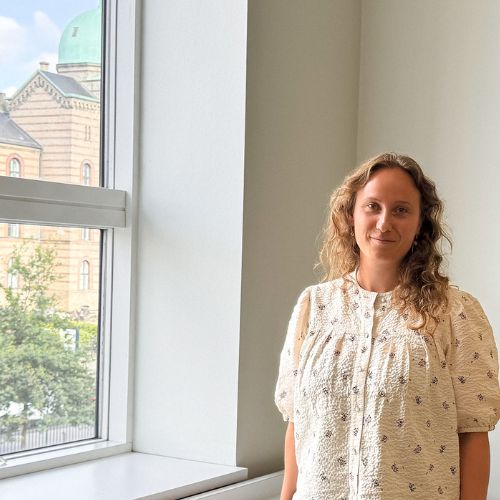
Psychologist Julie Enkebølle Hansen is a PhD student at the Centre for Family Research (CIF), Department of Psychology, University of Copenhagen. PHOTO: Elsass Foundation
“As a parent, you may also have hopes and expectations for what your child should be able to do at certain times, which can make it even more stressful if the child is not quite there yet. The results highlight the importance of early support and guidance for parents, who may be under considerable strain.”
The child needs more breaks
Using video recordings, Hansen and her research team also studied parent-child interactions when the child was 15 weeks, 9 months, and 15 months old.
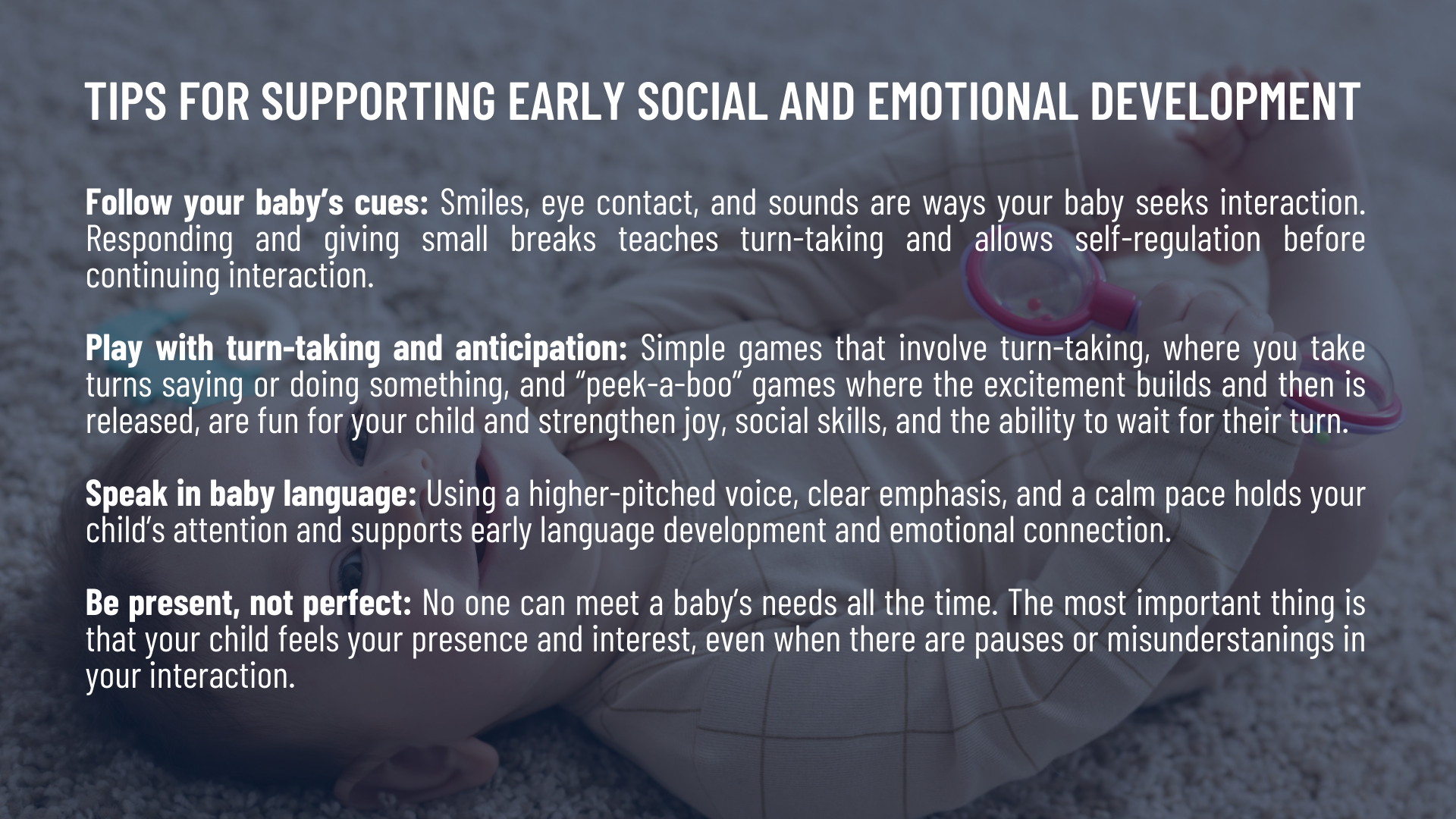
They examined, among other things, whether the child looked away frequently, sought contact with the parents, how parents responded to the child’s signals, and the amount of “turn-taking” in the interactions.
Observations showed that infants at high risk of CP were slightly less engaged in interactions, and their parents took a bit longer to learn to interpret their child’s signals compared to the comparison group.
“We can see that reading the child’s signals can be more challenging compared to the typically developing group,” says Hansen, and continues:
“When a child’s signals are not yet clear, it can be difficult for parents to interpret them. Parents try to adapt to the child’s situation and may respond more intrusively during interactions. When the interaction becomes overwhelming for the child, they typically withdraw, as they need more breaks and time to process social signals.”
The study shows that parent-child interactions remain challenging until the child is around 15 months old, but they gradually find each other over time.
“Parents and children learn to interpret one another as the child develops. By around 15 months, parents are better able to understand their child’s signals during interactions, though they may still be somewhat directive - perhaps because they are adapting to a child who needs extra support or because they are focused on training with the child,” explains Hansen.
Parents in the role of therapist
According to Hansen, parents can sometimes find it difficult to step back from a controlling role and give the child the necessary breaks in interaction.
“As a parent of a child at risk of CP, you often need to do a lot of training with your child. And understandably, it can be difficult to let go of the ‘therapist’ role,” says Hansen, sharing another interesting observation from the study:
“When we record the videos, we ask parents to interact and play with their child as they normally would. Interestingly, many parents of infants at high risk of CP tended to use play time to train specific skills with the child, even though we hadn’t asked them to.”
Hansen offers a possible explanation:
“Many of these parents always have the training in mind. There are so many things that parents may feel they have to live up to. They feel a great responsibility to ‘help their child develop skills,’ so it is quite natural that they unconsciously start training during play.”
Increased focus on parental wellbeing
Hansen’s study is the first to examine very early social and emotional development in infants at high risk of CP. According to the researcher, this is important, as the study suggests that early social and emotional skills can influence later school performance, wellbeing, and social functioning relative to peers.
She also explains that the parent-child relationship is one of the most important factors for the infant, central to cognitive, linguistic, motor, social, and emotional development.

“Most parents gradually learn to understand their child’s cues. Parents of children with CP may sometimes find it requires more effort. But it’s important to remember that it is never too late - the relationship can always develop. If the start has been difficult, it can be ‘repaired’ and new ways of interacting found,” says Hansen, adding:
“If parents are worried about whether they are doing the right thing in interactions with their child, it’s important to focus on whether the child is thriving now, and to seek professional support if there are any doubts or needs. It’s equally important for parents to remind themselves that they are doing their best. They know their child and will learn their signals over time.”
Hansen calls for more research to inform early psychological interventions and prevent challenges later on.
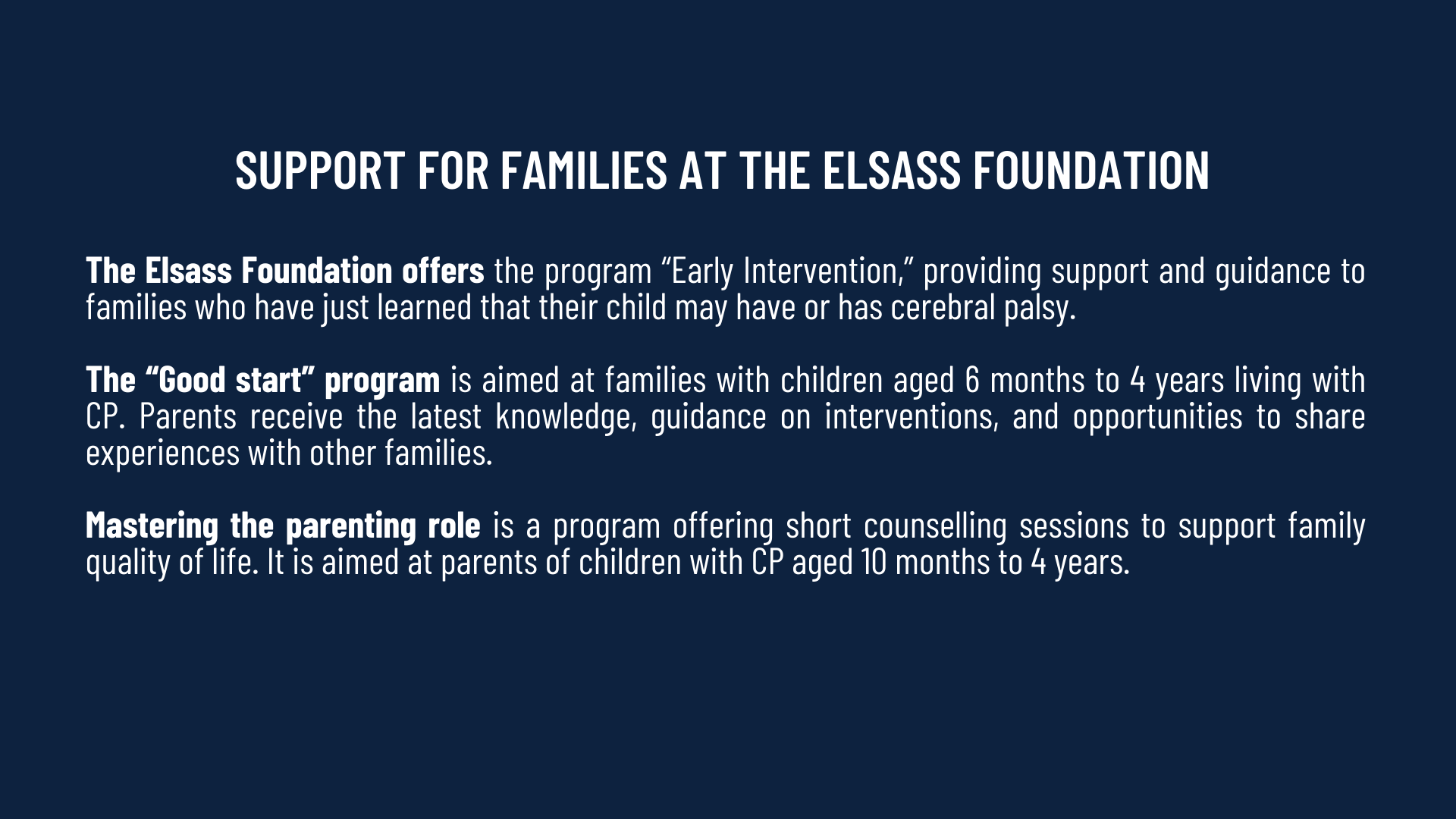
“There is a need for targeted psychological support for parents while the children are very young, as the family’s mental wellbeing is often overlooked or overshadowed by the focus on motor development,” she says.
She hopes the new knowledge from the project can help develop teaching materials for municipalities and public health nurses, focusing on parent-child interaction and parental mental wellbeing.
“Parents are often left on their own in this situation, so I hope we can better support them and remind them that they are doing well. It’s also important to occasionally just play ordinary games with the child, without training, as this is when attachment and social and emotional skills are strengthened,” concludes Hansen.