
Guidance wristbands and app for speech difficulties: new tech solutions developed in a weekend
At an intensive hackathon, students, people with disabilities and their relatives worked together to develop prototypes that can make everyday life more accessible and inclusive for people living with a disability.
The first weekend of March was buzzing with ideas, engagement and collaboration at DTU Skylab in Lyngby. Around 100 students, people with disabilities, relatives and specialists had gathered with one goal in mind: to invent new technology that makes everyday life with a disability easier and more inclusive.
The format was a so-called hackathon, three intense days during which ideas are turned into working prototypes.
Throughout the weekend, participants worked closely together across disciplines and backgrounds. The Elsass Foundation, along with several people with cerebral palsy (CP) and their relatives, also shared their insights into what daily life with CP can look like, and where technology can truly make a difference.
"It was inspiring to witness the students' engagement throughout the entire weekend and the special energy that came from everyone working towards solutions for real needs," says Morten Freiesleben, occupational therapist and development officer at the Elsass Foundation.
"Something unique happened in the meeting between students, people with lived experience, healthcare professionals and designers, where everyone contributed on equal terms and where new perspectives shaped the process," he adds.
ABOUT DISABILITY TECH HACKATHON
- The event ran over 4 days: three days of development and one final day.
- It was organised by Disability Tech Denmark, a project and network of various actors in the technology and disability sector, including the Elsass Foundation.
- The event was special because both developers and users collaborated to create ideas and prototype versions of technology that improves daily life and promotes inclusion for people with disabilities
Read more here >>
From idea to prototype in 72 hours
In just three days, 16 teams developed different proposals for technology that can make a difference in daily life for people with CP and similar conditions, ranging from communication tools to navigation aids and digital communities.
One of the prototypes was an AI-based app called A Real Time Communications Assistant, which tackles a problem many people with speech difficulties know well: by the time they are ready to respond, the conversation has already moved on.
“It takes time to type or use symbols. But conversations don't wait," one of the team members pointed out during the closing day's pitches.
The app uses artificial intelligence to follow the conversation and suggest sentences in real time, so that the person with speech difficulties can respond more quickly and participate in the conversation more easily.
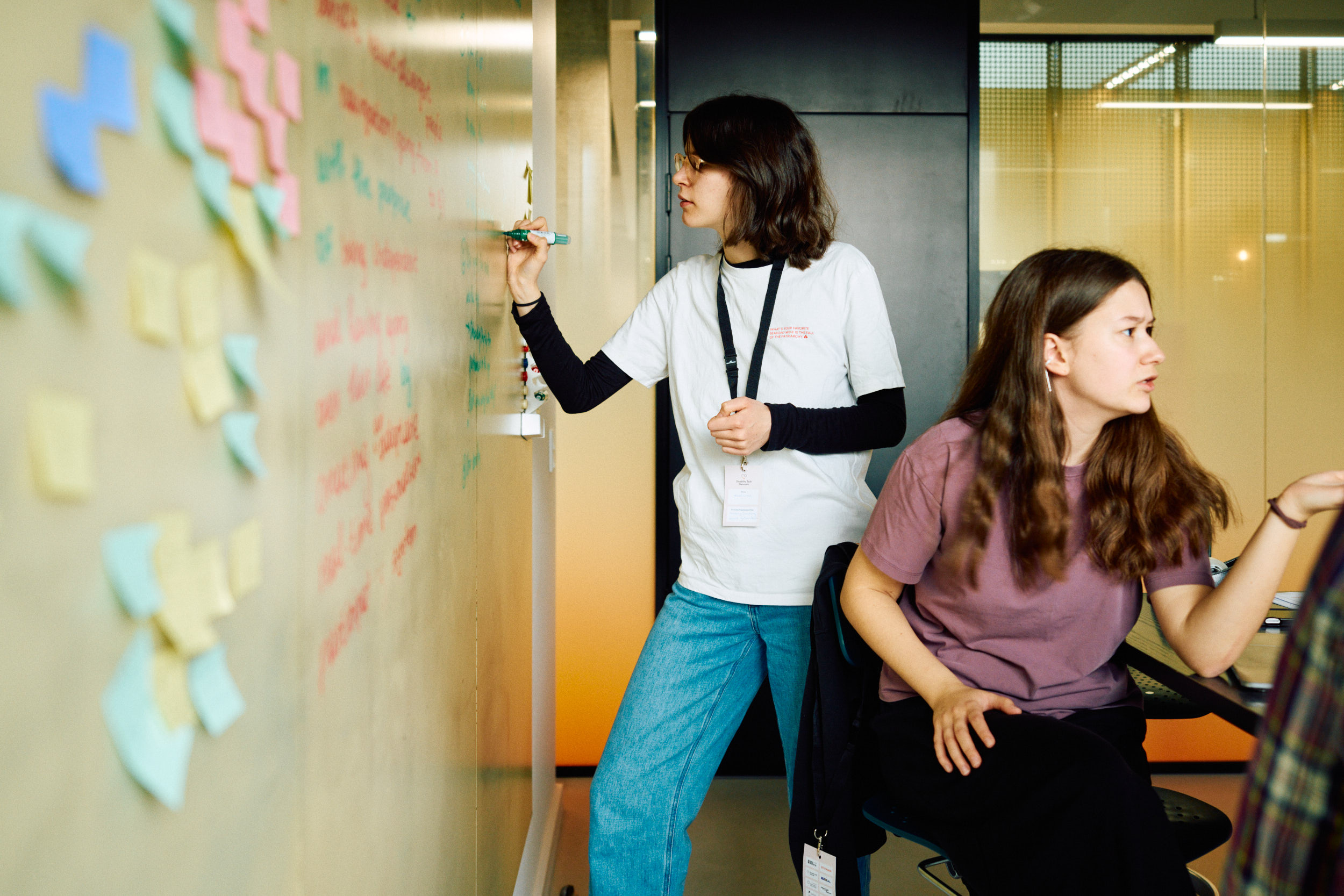
A group gathers their thoughts and ideas on a whiteboard. PHOTO: Rune Pedersen
Another project, Panda, is a navigation assistant for children and young people with cognitive challenges or visual difficulties, who need structure and a sense of security. The solution pairs an app with a soft panda toy fitted with a small screen, guiding the child or young person step by step as they travel from one place to another.
For many relatives, daily life can be just as complex, if not more so. With that in mind, one of the teams developed the platform Insight Link, which brings together networks, advice and practical tools for relatives and carers of people with a disability. On the platform, users can share experiences and get in touch with others in the same situation.
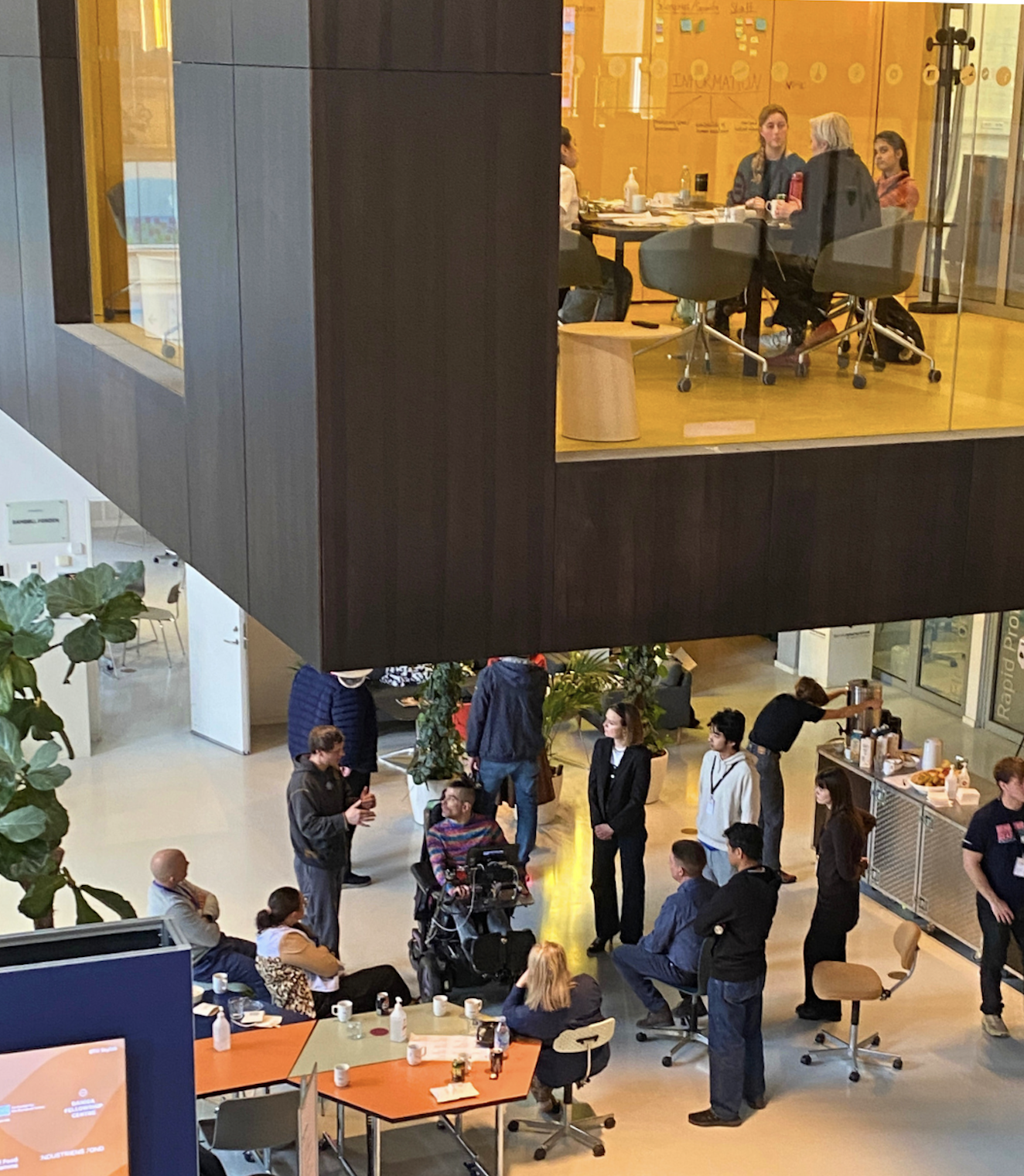
Jeppe Forchhammer, who has CP, shared his experiences and knowledge with hackathon participants. PHOTO: Rune Pedersen
The hackathon winner was the team behind Cue, an app and two wristbands that guide you with vibrations when you need to get from A to B.
"Once you have added a journey in the app, Cue will guide you in a discreet, phone-free way, where you don't need to process visual information or interpret complicated maps," one of the team members explained during the final day's pitches.
The route is planned according to your personal needs, for example by avoiding crowded places or physical obstacles. And if something unexpected arises, like a lift that is out of order, the system can quickly find a new route, the team explained.
When users are involved from the start
The hackathon was the first major event organised by Disability Tech Denmark, a project and network that brings together companies, organisations and users to develop technology for people with disabilities, including the Elsass Foundation.
The Elsass Foundation’s two development officers, Mikkel Damgaard Justiniano and Morten Freiesleben, were there for the whole event and gave an inspirational talk on disability-driven innovation.
"It is important to involve the end user from start to finish and to see them as an expert on equal terms with the engineer and the designer," explains Justiniano, engineer and development officer at the Elsass Foundation.
In the talk, they described projects from their work at the Elsass Foundation, including a 3D-printed joystick developed for a wheelchair user and the software solution ALF, which makes it possible to control computer games using eye movements.
Three minutes to pitch an idea
The final day culminated in Microsoft's large conference hall, where the 16 teams had to present their idea and prototype in just three minutes in front of a panel of judges and an audience of around 120 people.
The judges looked particularly at the originality of each idea, how well the solution promoted inclusion, and the quality of the team's presentation.
Nerves were on edge and many participants rushed through their rehearsed pitch, only just finishing before the three minutes were up.
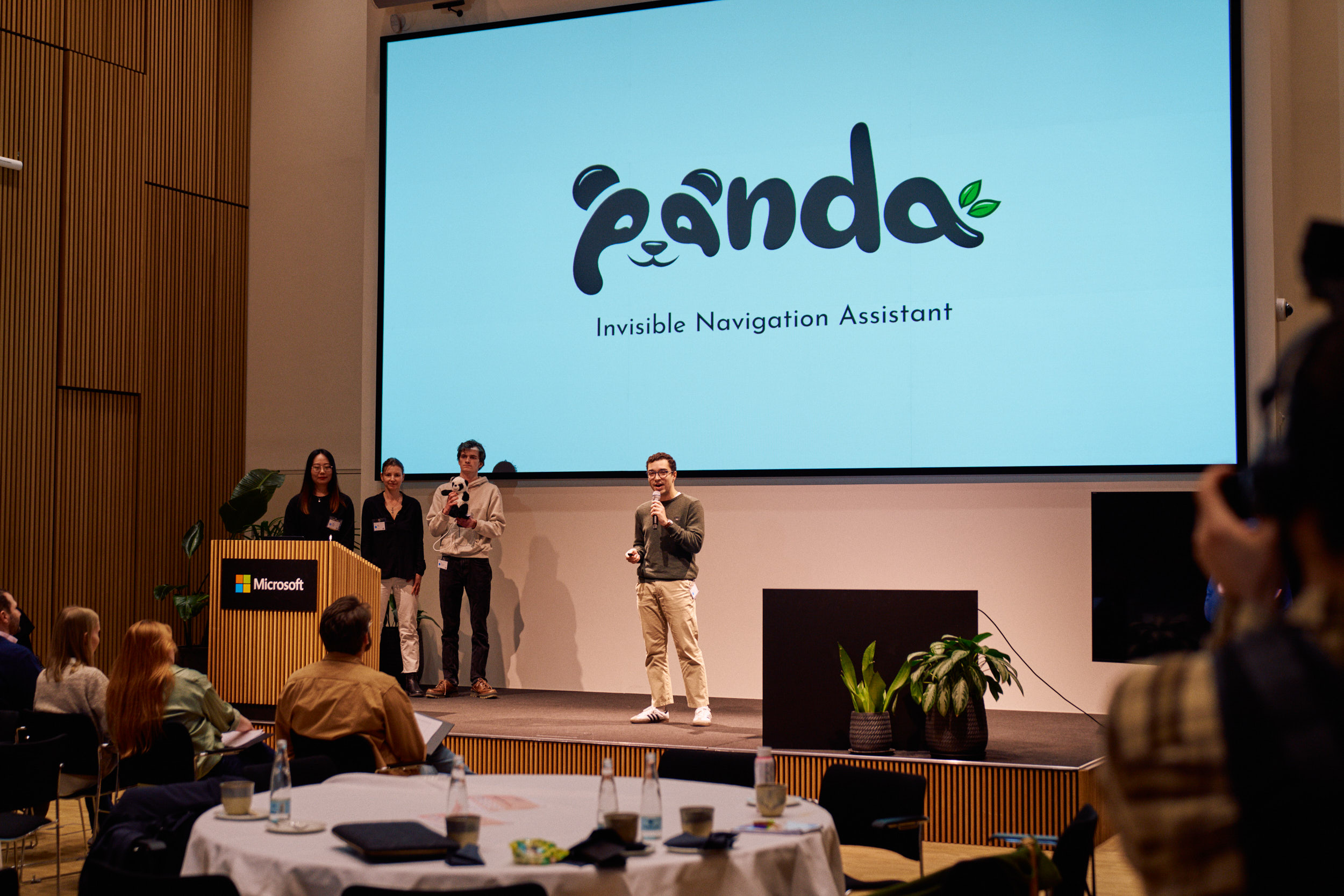
The Panda solution being pitched to the judging panel. PHOTO: Rune Pedersen
The winning team behind Cue, the app and the guiding wristbands, received a prize that can support the further development of their solution both financially and through mentoring. And that is precisely what hackathons are for, Justiniano points out:
"Even though the projects are only prototypes at this stage, the ambition is that some of them can be developed into real solutions or potentially released as open-source solutions that others can use and build on."
Disability Tech Denmark has a clear ambition to continue creating inclusive events in the future, where people with various forms of disability are naturally included. Upcoming events will be shared regularly on their website.