A network for parents of children with CP: When someone finally understands
A parent network can make a real difference when life is turned upside down. Psychologist Anne Reinholdt Rom explains why it helps to meet other people who understand. They know the thoughts, worries and feelings you can be dealing with as the parent of a child with CP.
“I thought we were the only ones who felt like this.” Anne Reinholdt Rom, a psychologist at the Elsass Foundation, hears that sentence often. It comes from parents of children with CP, after their first time in a parent network.
“Quite a few parents come into the room with reservations and find it hard to open up and share how vulnerable they feel with strangers. Usually, it is not long before they are sitting there nodding along to each other’s stories and reflections. A very particular understanding grows between them, one that only other people in the same situation can really grasp,” she says.
That understanding is the heart of the parent networks that Reinholdt Rom runs regularly with colleagues from the Elsass Foundation’s psychology team. Parents of children with CP meet a psychologist four times to share experiences, talk through their worries and get new perspectives on the difficulties they are facing.
Life turned upside down
When you have a child with CP, daily life changes a lot. Many parents are left with difficulties and questions that family and friends find hard to understand.
“For most people it turns life upside down. The picture they had of what being a parent would be like is often shaken, and that can cause both shock and grief,” Reinholdt Rom says. She continues:
“Many feel alone and feel there is something wrong with them for having the worries and mixed feelings that can come with the diagnosis. They love their child, and at the same time they grieve that life did not turn out the way they had imagined. So it can be an enormous relief to meet other parents and find that they feel the same way.”

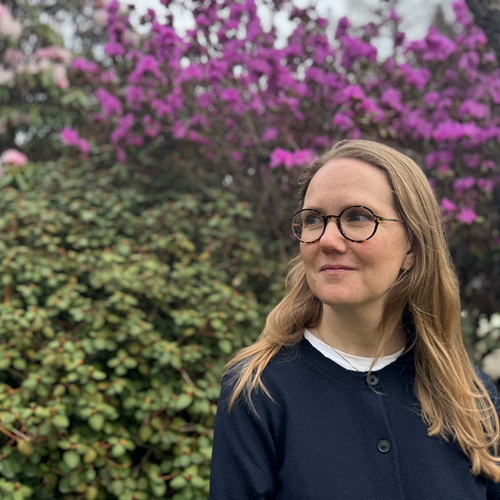
In the network, psychologist Anne Reinholdt Rom sends parents home with practical tools for handling being a parent. PHOTO: the Elsass Foundation
A space where you do not have to explain
For many parents it is hard to find the time and the energy for a network, in a life already full of appointments, exercises and practical jobs. Even so, Reinholdt Rom finds that people often leave with more energy than they arrived with.
“A lot of them say they feel lighter on the way home. They get a break from daily life and a space where they can unload, while other people listen and understand. That gives them a new perspective and the energy to keep going,” she says.
She points out that the network gives parents something they often miss, a place where they do not have to explain or defend how they feel.
“Even though we only meet four times, I find that people form a special bond very quickly,” says Reinholdt Rom. She continues: “They often say they do not feel they have to explain themselves. The others know what they are talking about from the first sentence.”
So for Reinholdt Rom the parent network is not only about sharing experiences. It is also about a basic human need to be seen and understood.
“We become who we are through meeting other people. When someone listens to us and recognises what we have been through, we get a chance to understand and accept ourselves and our choices better. That can mean an enormous amount to parents who have carried difficult thoughts on their own for a long time.”
New stories
The shared understanding in the group does not only create a sense of belonging, Reinholdt Rom explains. It also gives the parents a starting point for working on the thoughts that can weigh so heavily on them.
One of the things she helps them with is the anxious, worried thinking. Together they work on building fuller stories about what they have been through, or what they are living with now.
“It might be a mother who has told herself that her child’s CP was caused by her being stressed during the pregnancy. When we work with those thoughts in the network, we open them up so that other stories can take shape. She may then start to let go of a story she has been stuck in and carried around for a long time. She can see new connections, new intentions and new causes,” she says, and explains further:
“Along the way, parents often discover where the shameful or difficult thoughts came from. That can be an important step towards treating themselves with more care and seeing themselves more kindly.”

The parent network meets four times over the autumn. PHOTO: the Elsass Foundation
More than good enough
Working on new stories is also about spotting what matters most to hold on to as a family, according to Reinholdt Rom. So the parents also work on clarifying their values and their priorities in daily life.
“I often hear parents say they feel constantly behind and describe themselves as ‘a family running on empty’. But then they start telling me about everything they actually do for their child: appointments, exercises, physiotherapy on horseback, playing at home. It becomes clear that they are in fact doing more than well enough,” she says and continues:
“Together we look at why that feeling of running on empty is so strong. What matters most to them to have time for as a family, and how can they make space for it and find more energy day to day?”
Common ground across different experiences
The psychologists try to put the groups together so that the parents are matched by how much support their child needs. Even so, they arrive with different experiences and different difficulties, Reinholdt Rom says.
Some are carrying trauma and distressing experiences from a difficult pregnancy, birth or hospital stay, which can also cause unpleasant physical reactions.
“It can be hard to turn up when sleep problems, a racing heart or a whirl of thoughts are taking up all your energy. But that is exactly when you may most need to talk to other people and find ways of handling it,” she says.
Parents are also at different stages. Some are still in shock at the diagnosis, while others are further along in reshaping the expectations they had of family life. That difference is exactly what can make the group strong, Reinholdt Rom says.
“The ones who are close to the diagnosis can put words to feelings that others may not have worked through yet. And the parents who are further along can offer hope, experience and practical ideas for handling what you are facing,” she says.